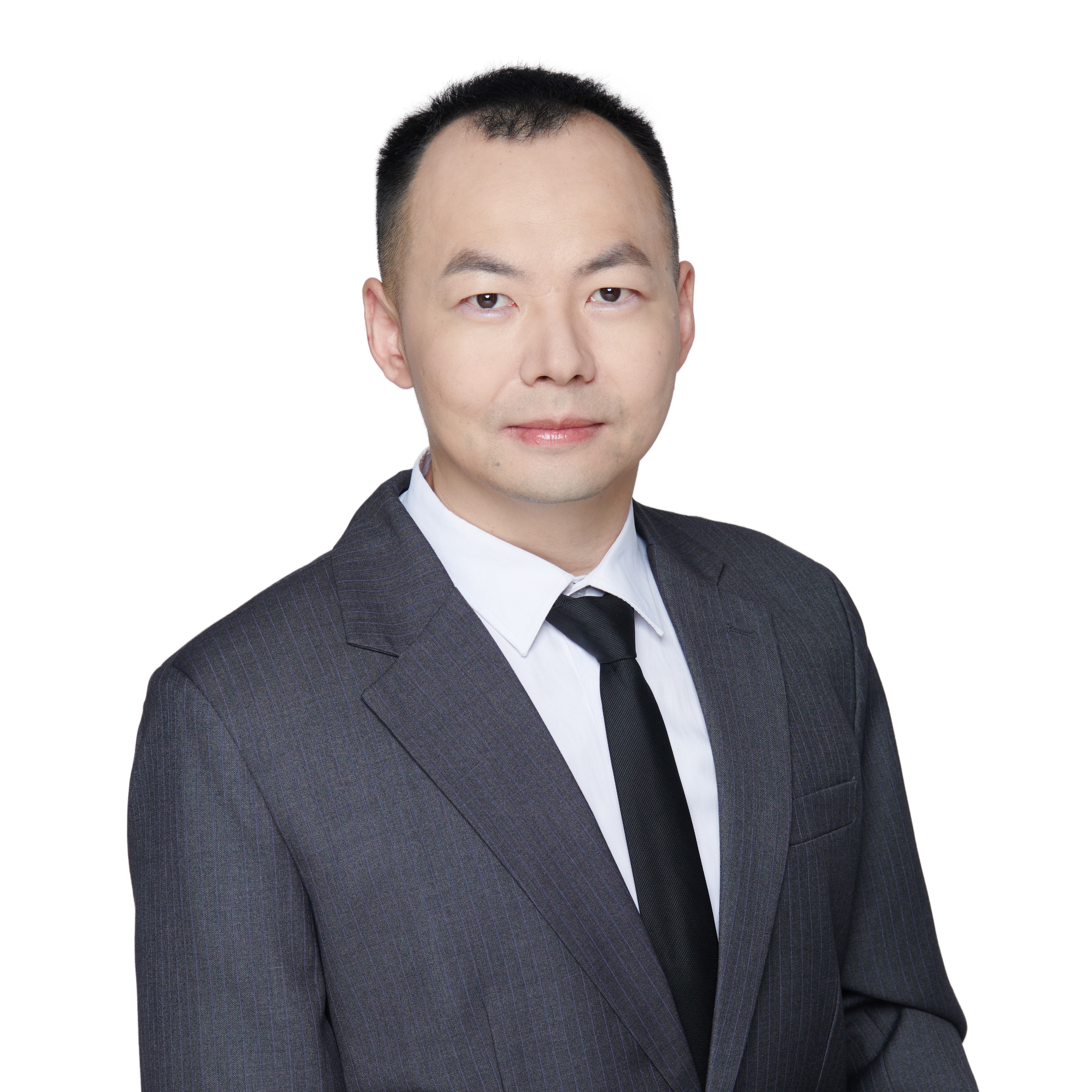
Biography
Dr. Xianglin Huang is a Visiting Research Professor at Dongguk University–Seoul and a Postdoctoral Researcher at the InnoCORE PRISM-AI Center, Korea Advanced Institute of Science and Technology (KAIST). He received his Ph.D. in Mechanical Engineering from the University of Manchester (2024) under the supervision of Prof. Qingming Li, one of the leading authorities in impact engineering.
His doctoral thesis established a mathematically rigorous, data-driven methodology for characterizing the dynamic flow stress of metals, combining SVD/CP tensor decomposition with artificial neural networks to determine constitutive equations directly from discrete SHPB experimental data. This work addressed a long-standing gap in the field: a systematic framework for verifying and relaxing the assumptions underlying the widely-used Johnson-Cook equation. The resulting series of four first-authored papers in the International Journal of Impact Engineering (2023–2027) forms the core of his academic identity in impact dynamics. The latest of the four, published in 2027, introduces the TEDI-FS framework: a tensor-decomposition-based method that extrapolates flow stress models beyond their experimentally calibrated strain-rate domain and validates the extrapolation against Taylor-Hopkinson impact tests at strain rates up to ~105 s-1.
The four papers work within an explicit boundary stated in the thesis: an isotropic metal obeying J2 (von Mises) plasticity, whose behavior is captured by a single scalar flow stress σ(ε, ε̇, T). This is not a simplification to be lifted later; it is load-bearing throughout the tensor-decomposition and extrapolation procedure, and there is no current work applying it to other material classes. Foams and other cellular solids are pressure-sensitive and densify under hydrostatic load, and ceramics fail by brittle fracture rather than ductile flow, so neither fits the same scalar-flow-stress formulation without a substantially different treatment. Constitutive modeling beyond metals is a separate, longer-term interest of Dr. Huang's, not an extension of this method.
As a postdoctoral researcher, Dr. Huang also leads an independent research stream on the impact safety and health management of lithium-ion batteries (LIBs). This work encompasses: (i) experimental characterization of LIB failure modes and energy thresholds under quasi-static, drop-weight, and high-velocity impact loading; (ii) deep learning frameworks using acoustic emission signals for real-time battery damage assessment; and (iii) multiphysics finite element models coupling structural impact with electrochemical degradation. The constitutive modeling and battery streams are methodologically independent; what they share is a common foundation of rigorous impact experimentation and data-driven analysis.
Underneath both streams sits a broad body of work in impact mechanics that began during his master's research at Harbin Institute of Technology and has continued through his doctoral and postdoctoral years. It spans the dynamic response and energy absorption of sandwich structures under impulsive loading, high-velocity impact of metallic and polymer-aluminium layered plates, the impact behavior and mesoscale damage modeling of 3D woven composites, and machine learning surrogate models for impact resistance, comprising ten publications (2016–2026) in journals including IJIE, Thin-Walled Structures, International Journal of Mechanical Sciences, and Composite Structures. It is also where new directions are opened: through a long-running collaboration with Dr. Yunfei Deng, in which he co-supervises master's students, further work is currently in progress on the impact response of 3D-printed materials, the energy absorption of lattice structures, the anisotropy of metals, and prestress effects on impact damage in ceramics.
His long-term vision runs along both streams: establishing data-driven flow stress determination and extrapolation as standard practice in impact engineering for metals, and contributing experimental evidence, monitoring methods, and simulation tools toward the impact safety standards of next-generation energy storage systems. Constitutive characterization of material classes such as foams and polymers, where the underlying physics differs enough to need a new formulation rather than a direct transfer of the metal method, is a separate longer-term interest.
Research Interests
Dynamic constitutive modeling
Impact engineering
SHPB testing & data analysis
Taylor-Hopkinson impact testing
High-velocity impact mechanics
Composite impact behavior
Crashworthiness & energy absorption
Tensor decomposition (SVD/CP)
Machine learning for mechanics
Battery impact safety
Lithium-ion battery PHM
Deep learning (CNN, LSTM)
Multi-physics FEM simulation
Acoustic emission monitoring