Constitutive Modeling  ·  Battery Safety  ·  Impact Dynamics

Dr. Xianglin
Huang

Visiting Research Professor, Dongguk University–Seoul
Postdoctoral Researcher, InnoCORE PRISM-AI Center, KAIST

Every crash, impact, and perforation simulation stands on one question: how does the material behave at extreme strain rates? My research answers it with data-driven rigor, from flow stress models of metals validated up to 105 s-1, to AI-based real-time impact safety assessment of lithium-ion batteries.
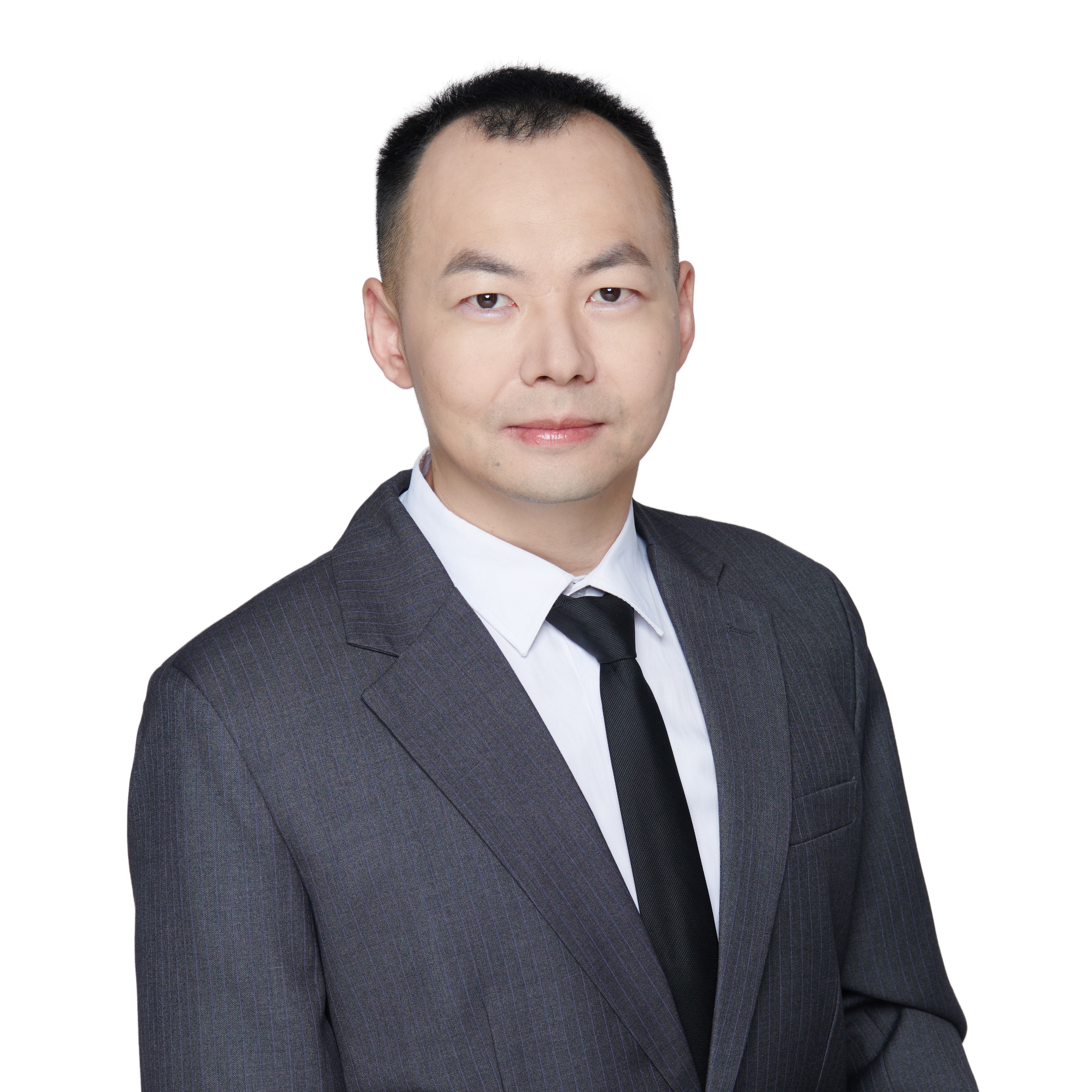
Dr. Xianglin Huang
Research Areas

Two Research Streams, One Experimental Foundation

Data-driven constitutive modeling and lithium-ion battery safety are pursued independently, each with its own methodology. Both rest on the same foundation of careful impact experimentation, which is also where a set of exploratory directions is being built up.

Constitutive Modeling
Core Research
Data-Driven Constitutive Modeling
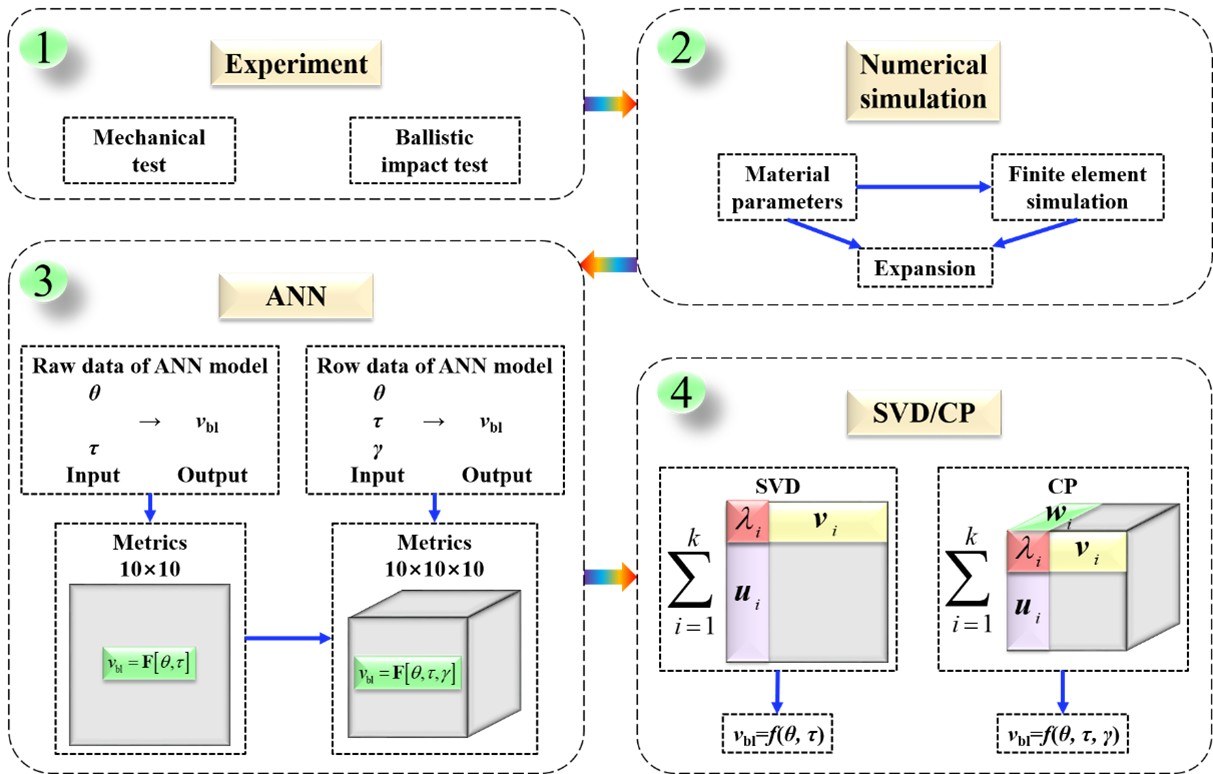
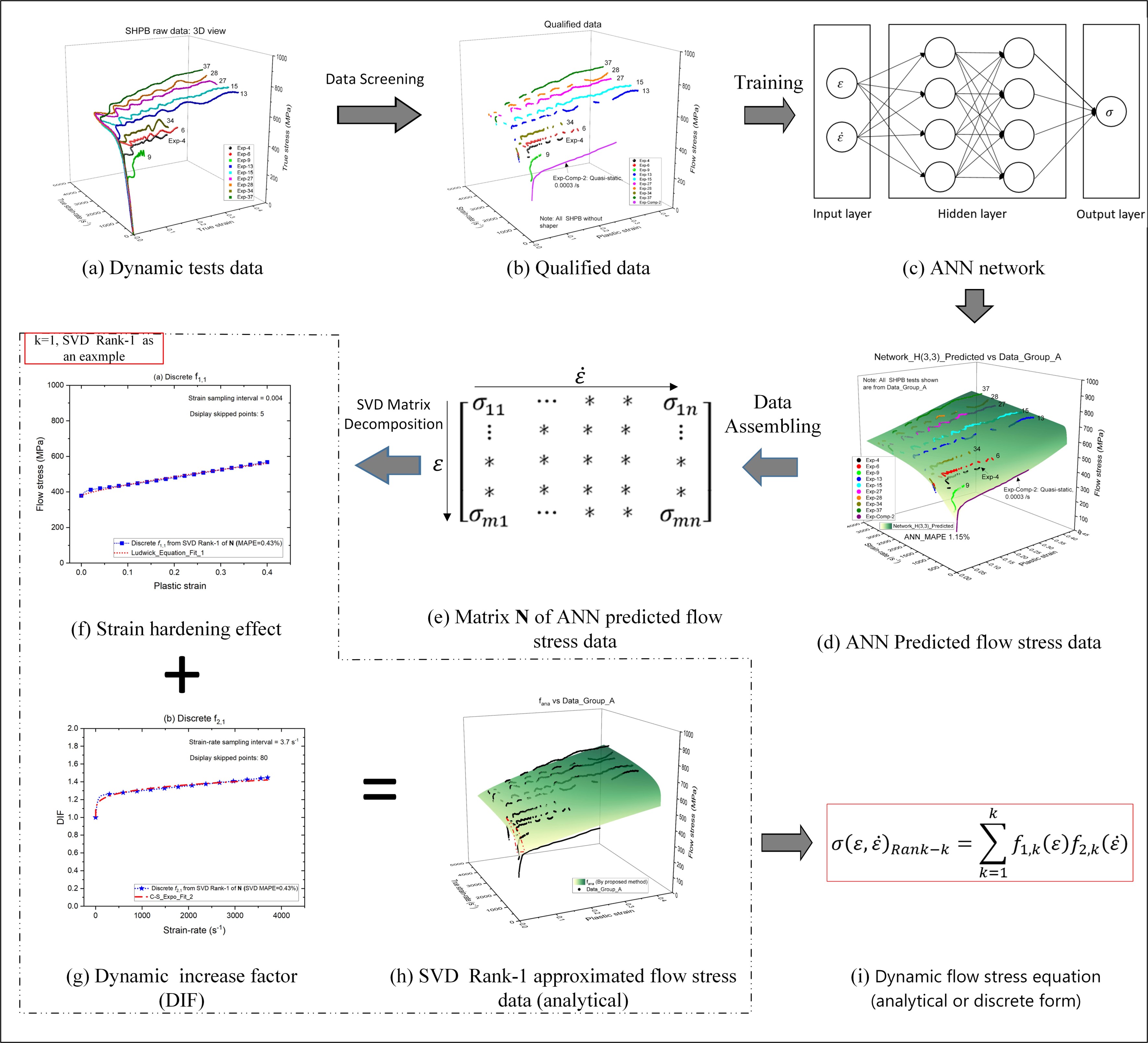
A general method for turning discrete dynamic test data into a flow stress model: SVD/CP tensor decomposition combined with neural networks, used to verify, determine, and extrapolate the stress response over strain, strain rate, and temperature. Established on metals through four consecutive first-authored IJIE papers, built on an explicit isotropic-metal (J2 plasticity) assumption stated in the underlying thesis.
4 first-authored papers in IJIE  ·  2023–2027
Learn More →
Battery PHM
Current Focus
Battery Impact Safety & Health Management
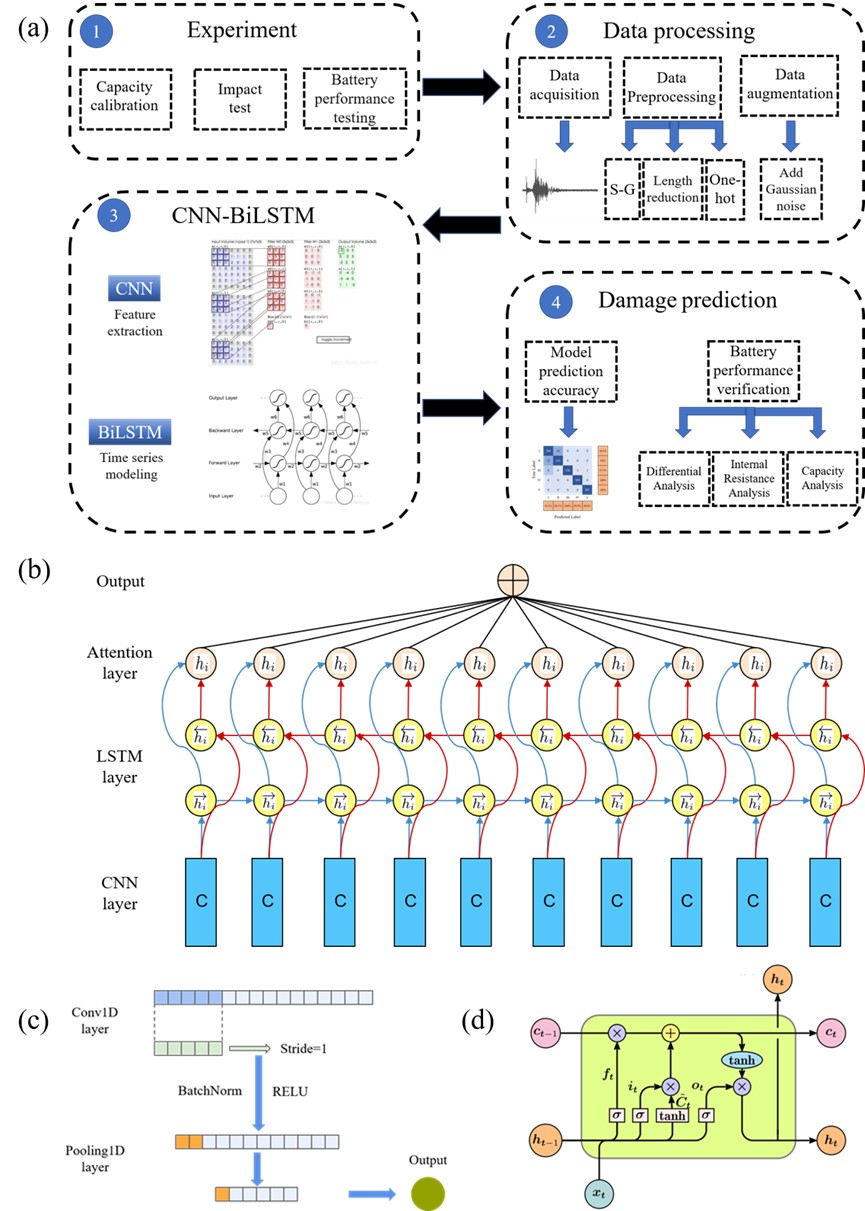
An independent research stream on lithium-ion battery safety: failure modes and energy thresholds of cells under extreme loading, deep learning frameworks that detect internal damage in real time from acoustic emission, and multiphysics models linking mechanical damage to electrochemical degradation at pack level.
4 papers in JPS, JES, EFA, JMST  ·  2026
Learn More →
Impact Mechanics
Foundation & Emerging Directions
Impact Mechanics & Structural Response
The experimental base both streams are built on, and the ground where new directions start. Published work covers metallic and layered plates, 3D woven composites, sandwich structures under impulsive loading, and ANN surrogate models for critical perforation velocity and residual velocity. Ongoing collaborative work reaches into 3D-printed materials, lattice energy absorption, metal anisotropy, and prestressed impact damage of ceramics.
10 publications in IJIE, TWS, IJMS, Composite Structures  ·  2016–2026
Learn More →
Why constitutive modeling? Every explicit finite element simulation of a crash, impact, or perforation event, whether in ABAQUS, LS-DYNA, or any other solver, needs a material model that tells the software how stress evolves with strain, strain rate, and temperature. The fidelity of the entire simulation is capped by the fidelity of that model. Making these models rigorous, data-driven, and validly extrapolable for metals is the core of this research; constitutive modeling of softer, more complex material classes is a separate, longer-term interest, not a current extension of this method. Learn more →
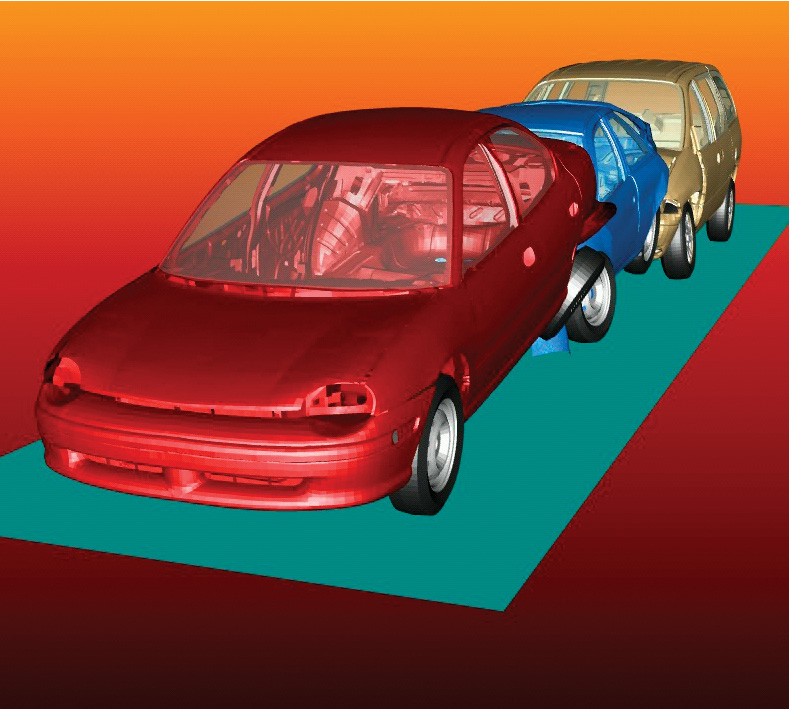
Finite element simulation of a three-car collision
FE model of a three-car collision. Image: Matt Howard, Argonne National Laboratory, via Wikimedia Commons, CC BY-SA 2.0.
Selected Publications

Featured Works

Highlights spanning constitutive modeling theory, impact mechanics prediction, and battery safety, published in leading international peer-reviewed journals.

2027
Xianglin Huang, Q.M. Li*
International Journal of Impact Engineering, Vol. 219, 105863
First Author IJIE Q1
2026
Xianglin Huang, Heung Soo Kim
Journal of Mechanical Science and Technology, Vol. 40(4), pp. 2405–2415
First Author Invited Review JMST
2025
2023
Xianglin Huang, Q.M. Li*
International Journal of Impact Engineering, Vol. 173, 104453
First Author IJIE Q1 Cited
View All Publications
About

Dr. Xianglin Huang

Dr. Huang received his Ph.D. from the University of Manchester (2024) under Prof. Q.M. Li, where he developed foundational data-driven methods for dynamic material characterization. His four first-authored papers in the International Journal of Impact Engineering (2023–2027) form a complete arc: verifying when decoupled flow stress equations are legitimate, determining them from realistic SHPB data in 2D and 3D, and now validly extrapolating them to very-high strain rates with Taylor-Hopkinson validation (TEDI-FS, IJIE 2027).

Currently at KAIST and Dongguk University, he also leads an independent research stream on lithium-ion battery impact safety: characterizing failure modes, developing deep learning frameworks for real-time damage detection, and investigating multiphysics pack stability. The two streams share an experimental impact-mechanics foundation, while each develops its own methodology.

Dr. Xianglin Huang
Latest Updates

News & Highlights

Aug 2026
🎉 Paper Accepted in International Journal of Impact Engineering
"Tensor-decomposition-based inverse characterization of flow stress for very-high strain-rate impact" (First Author, with Q.M. Li). The TEDI-FS framework extrapolates flow stress models beyond the SHPB-calibrated domain and validates them against Taylor-Hopkinson impact tests up to ~105 s-1, completing a four-paper IJIE series (2023–2027).
View Research →
Jun 2026
Invited Speaker at PHM Korea 2026 Annual Conference
Invited talk — "Impact-Induced Damage Assessment and Remaining Useful Life Prediction of Lithium-Ion Cells Using Acoustic Emission Features" (Physical AI and PHM track). June 24–27, 2026, Westin Chosun Busan Hotel, Busan, Republic of Korea.
View Activity →
May 2026
Paper Published in Engineering Failure Analysis
"Characterizing critical failure impact on LIB pack stability via multiphysics response" (Corresponding Author). Multiphysics FEM investigation of battery pack behavior under impact — revealing how SOC level and pack configuration interact to determine both mechanical integrity and electrochemical stability.
Read Paper →
Apr 2026
Invited Review Published in Journal of Mechanical Science and Technology
"Advancing battery prognostics and health management: Challenges and future perspectives" (First Author). A systematic review of battery PHM research paradigms — physics-based, data-driven, and hybrid — co-authored with Prof. Heung Soo Kim at KAIST. Identifies the "homogenization bottleneck" and proposes future directions including digital twins and explainable AI.
Read Paper →
View All News →