"My research develops data-driven methods for mechanics under extreme loading, along two independent streams: rigorous determination and extrapolation of flow stress across the full strain-rate spectrum for isotropic metals, and the impact safety and health management of lithium-ion batteries. Each stream builds its own methodology on a shared foundation of careful impact experiments."— Dr. Xianglin Huang
Constitutive
Modeling
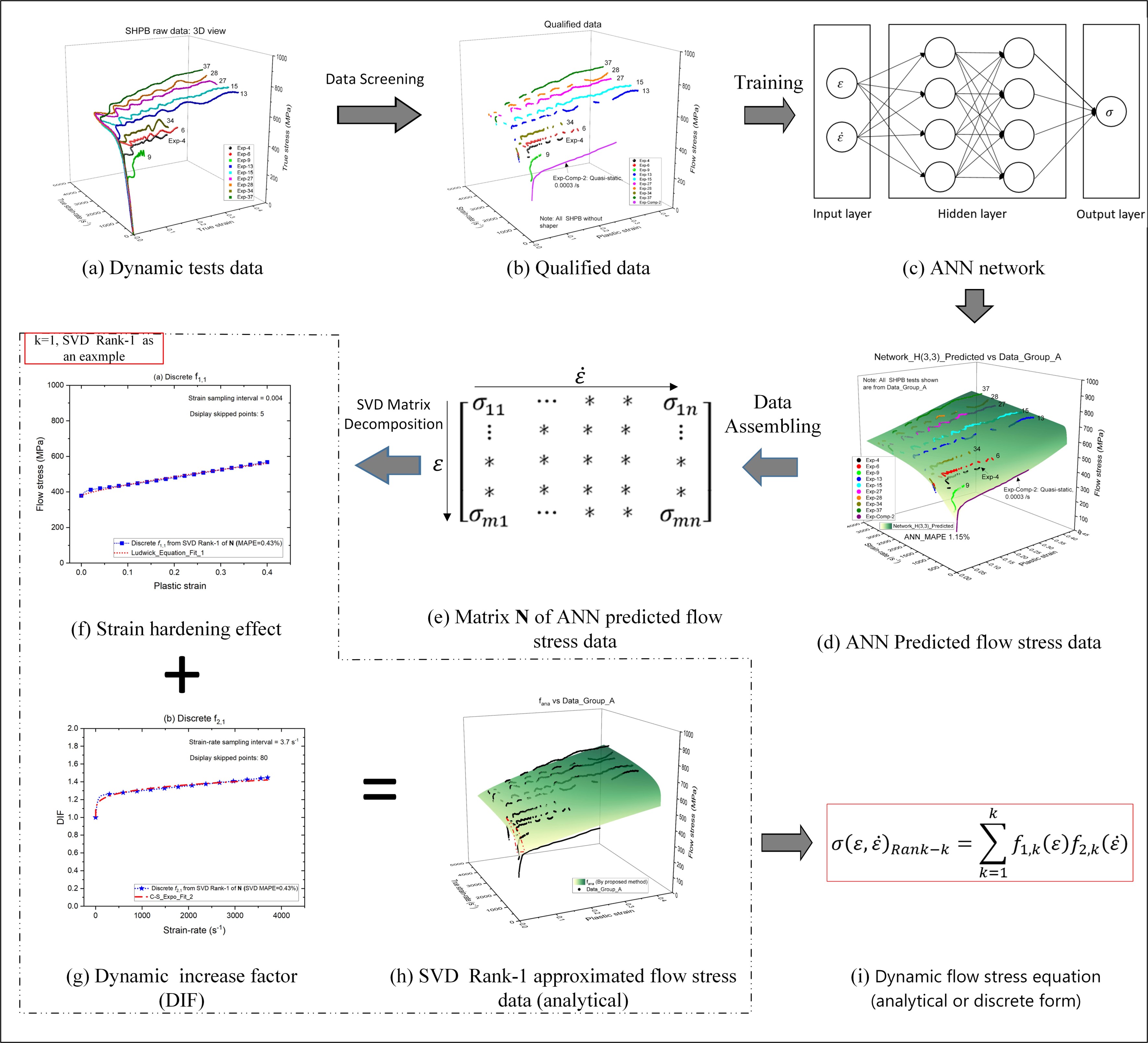
Every explicit FE simulation of a crash, impact, or perforation event in solvers such as ABAQUS or LS-DYNA depends on a flow stress model, and its fidelity caps the fidelity of the whole simulation. This research makes those models rigorous: SVD/CP tensor decomposition and ANN frameworks that determine dynamic flow stress directly from discrete experimental data, verifying and extending the Johnson-Cook equation paradigm. Four consecutive first-authored papers in IJIE build a complete methodology on isotropic metals under J2 plasticity: from mathematical foundations, through full three-dimensional (strain × strain-rate × temperature) characterization, to validated extrapolation at very-high strain rates (TEDI-FS, IJIE 2027).
Safety & Health
Management
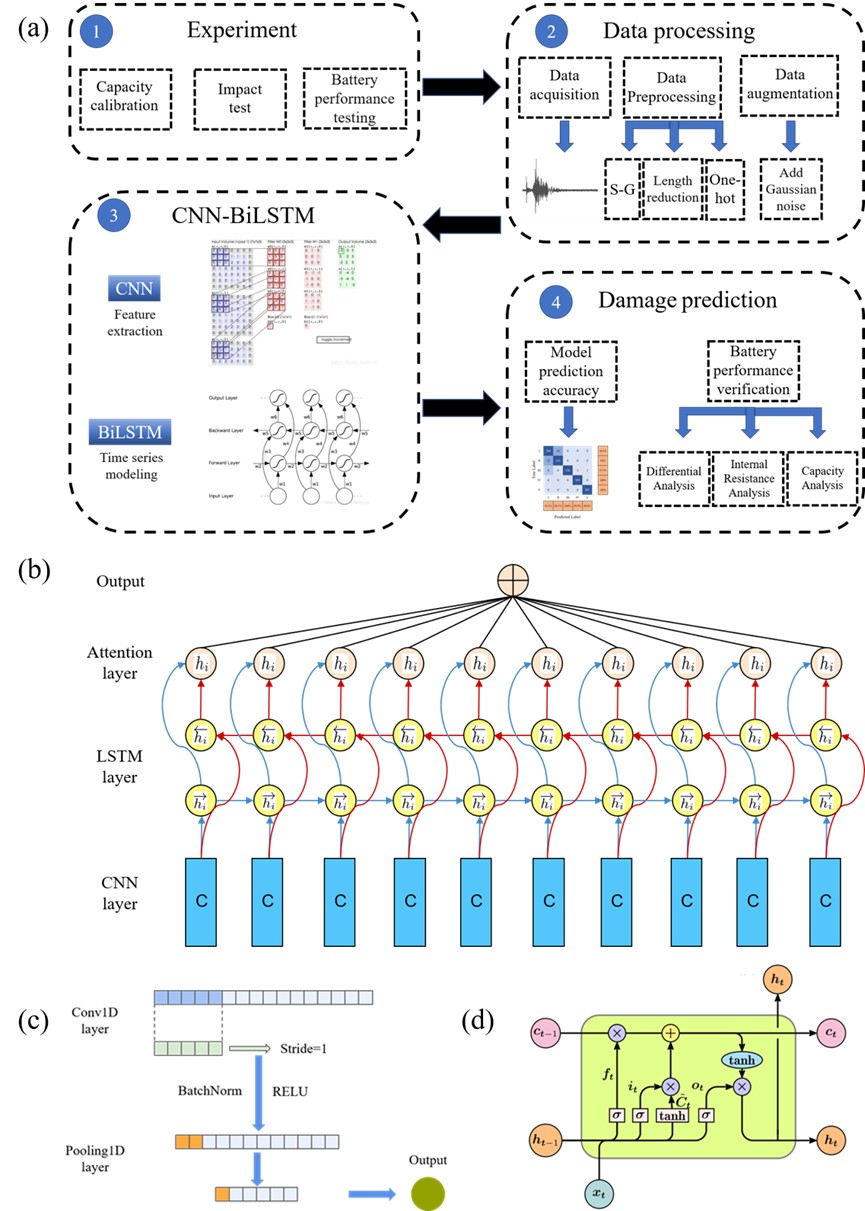
An independent research stream on lithium-ion battery safety: investigating failure modes and energy thresholds of LIBs under impact loading, building deep learning systems for real-time health monitoring via acoustic emission, and developing multiphysics FEM models coupling structural damage with electrochemical degradation. Four papers appeared in 2026 and the stream is growing, with further work in preparation on cell-level damage and pack-level response.
& Structural
Response
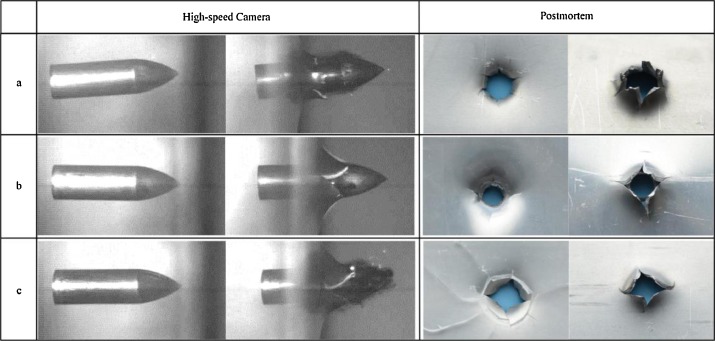
The experimental foundation underneath both streams, and the ground where new directions begin. Published work spans high-velocity impact of metallic and polymer-aluminium layered plates, impact behavior and mesoscale damage modeling of 3D woven composites, energy absorption of sandwich structures under impulsive loading, and ANN surrogate models for critical perforation velocity and residual velocity across multi-parameter impact spaces. Several collaborative directions are currently in progress and not yet published.
Methodological Toolkit
In the constitutive stream, artificial neural networks combined with SVD and non-negative CP tensor decomposition determine and extrapolate flow stress from SHPB and Taylor-Hopkinson experiments, with explicit FEM used for inverse identification; the same ANN+decomposition framework also underpins the high-velocity impact prediction work. The battery stream develops its own methods suited to its physics: drop-weight and high-velocity impact testing, acoustic emission sensing with deep learning classifiers, and coupled mechanical-electrochemical FEM at cell and pack level.