Dr. Xianglin Huang
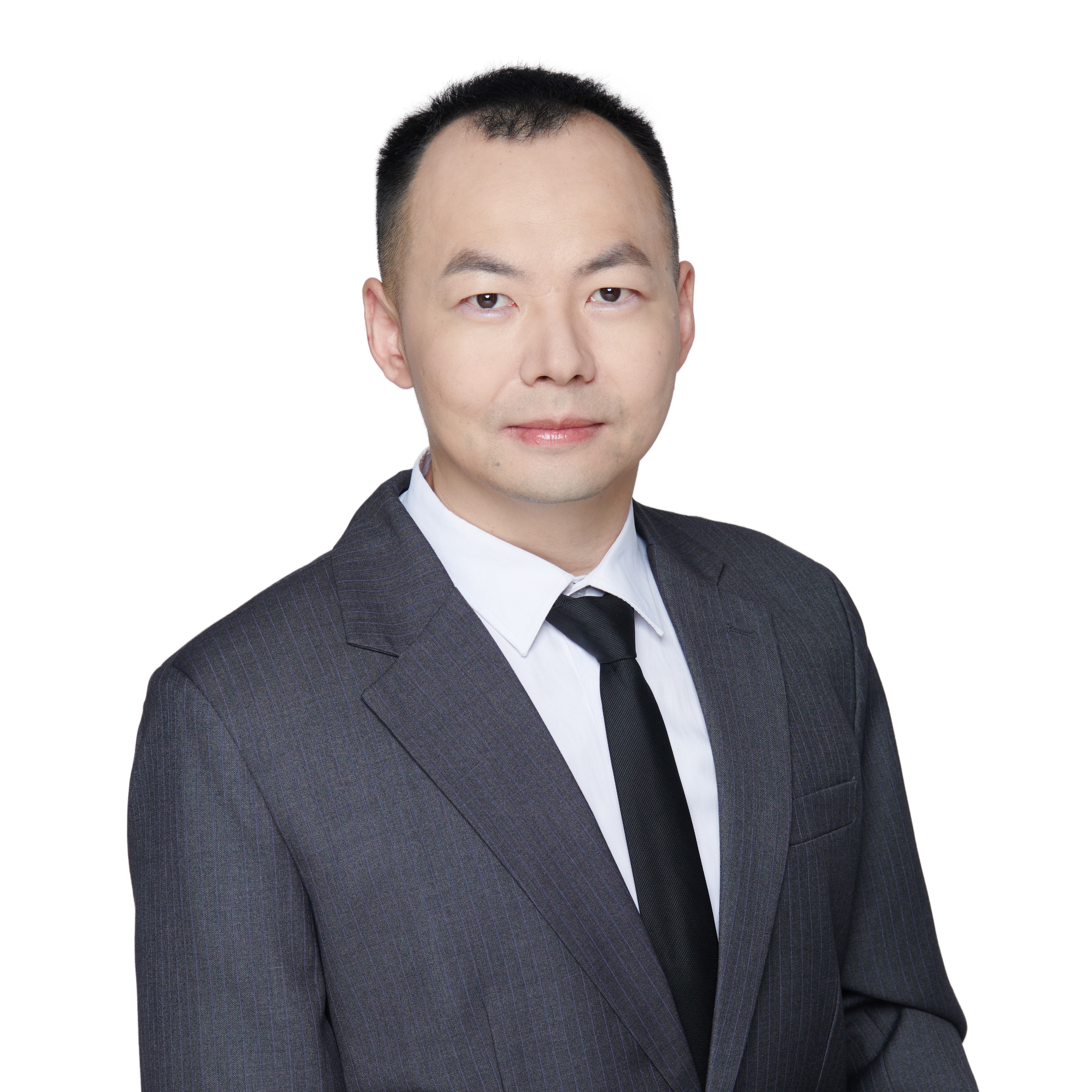
Visiting Research Professor · Dongguk University–Seoul
Dr. Huang's research centres on data-driven methods for characterizing the dynamic mechanical behavior of engineering materials. His work with Prof. Q.M. Li at the University of Manchester has produced a four-paper series in the International Journal of Impact Engineering (2023–2027), combining SVD/CP tensor decomposition with artificial neural networks to verify, determine, and represent dynamic flow stress equations from discrete SHPB experimental data. The newest paper (TEDI-FS, IJIE 2027) extends the series to validated extrapolation at very-high strain rates via Taylor-Hopkinson impact tests.
As a postdoc at KAIST, he also leads an independent stream on lithium-ion battery impact safety: characterizing failure modes, developing deep learning (CNN-BiLSTM) frameworks for real-time acoustic emission-based damage monitoring, and building multiphysics FEM models of battery packs under dynamic loading.
He co-supervises master's students through a long-running collaboration with Dr. Yunfei Deng, guiding their experimental and modeling work from problem definition through to publication. Several further collaborative directions are currently in progress, including the impact response of 3D-printed materials, the energy absorption of lattice structures, the anisotropy of metals, and prestress effects on impact damage in ceramics.
Active Collaborations
Key research collaborators who have contributed to recent publications.
Current Students
Master's students co-supervised with Dr. Yunfei Deng, working on the impact resistance of finite thickness plates and on the mechanical safety of lithium-ion batteries.
Former Co-Supervised Students
Master's students whose research I guided from problem definition through to publication, with their co-authored work and where they went next.
Prospective Students & Collaborators
I am always interested in working with motivated researchers at all levels — from undergraduate project students to postdoctoral researchers. Areas of particular interest for future collaborators include:
- Dynamic material characterization — SHPB testing, high-speed imaging, data-driven constitutive modeling
- Constitutive modeling beyond metals — foams, cellular materials, and rate-sensitive polymers
- Computational mechanics — ABAQUS, LS-DYNA, multiphysics FEM simulation, finite strain constitutive integration
- Battery safety — mechanical-electrochemical testing, acoustic emission monitoring, PHM algorithms
- Machine learning for mechanics — physics-informed neural networks, SVD/CP-based data decomposition, ANN surrogate models
If you are interested in joining or collaborating, please send an email to xianglin.huang@kaist.ac.kr with your CV and a brief statement of your research interests.
Get in Touch